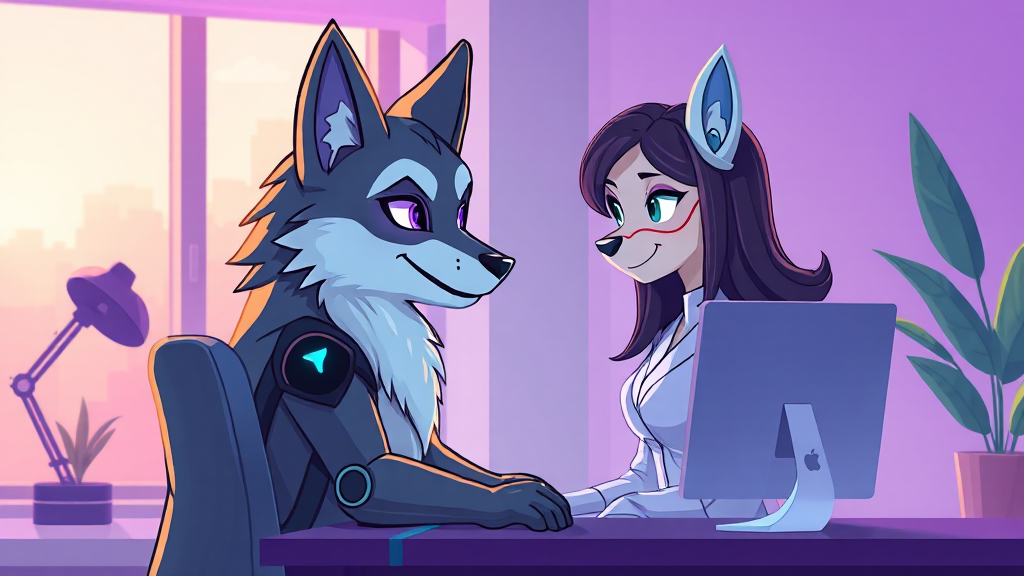
Furry AI Chat NSFW: How Custom Anthropomorphic Companions Are Built
Anthropomorphic characters have moved from niche forums and art commissions into a fast-growing corner of conversational AI. When people search for furry ai chat nsfw, they are usually looking for something specific: a character-driven chat experience where the persona, species, backstory, and tone are all adjustable, and where mature themes can be explored within a private, consenting interaction. This article explains how these systems actually work, what separates a good character from a forgettable one, and how to get more out of a session without running into the usual frustrations.
What Makes a Furry AI Character Feel Alive
The difference between a generic chatbot and a character that holds your attention for an hour comes down to consistency. A well-built furry persona has a stable identity: a species with specific physical traits, a personality that does not flip randomly between messages, a speech pattern that matches the setting, and a memory of what happened earlier in the conversation. When any of those elements break, the illusion collapses and the chat starts to feel like talking to a form instead of a character.
Good platforms handle this by separating the character definition from the language model itself. The model supplies general language ability, while the character card supplies the identity layer: name, species, appearance notes, personality keywords, relationship to the user, and any scenario framing. The more precisely that layer is written, the more the responses stay in character across a long session.
Species choice matters more than newcomers expect. A wolf persona tends to read as guarded and loyal. A fox reads as playful and evasive. A dragon reads as formal, ancient, or theatrical depending on how you frame it. These are conventions, not rules, but they give the model useful anchors, and they give you a faster way to reach the tone you actually want.
Why NSFW Roleplay Appeals to This Audience
Mature roleplay is not a side feature for most users of these tools, it is a core reason they show up. Furry communities have always included adult storytelling, from long-form written roleplay to commissioned art. AI chat extends that tradition by removing two practical barriers: you no longer need a willing partner who is available at the same time, and you no longer need to worry about embarrassing someone or being judged for a specific scenario.
That privacy is the real product. A user can explore a dynamic, pause, adjust the character, and continue without social friction. For people whose interests are niche even inside the fandom, that is a significant change. It also raises legitimate questions about boundaries, which is why the better platforms build in controls rather than pretending the topic does not exist.
It helps to think of these sessions as collaborative fiction rather than a service transaction. You bring the scenario and the pacing; the character brings reactions and dialogue. The best exchanges feel like co-writing a scene, and that framing tends to produce far better results than treating the bot as a vending machine for a specific output.
How Character Cards Are Structured
Most platforms use a layered prompt architecture. The system layer sets safety rules and general behavior. The character layer defines who the persona is. The user layer describes who you are in the fiction. The conversation history provides continuity. When a character feels off, the problem is almost always in one of those layers rather than in the underlying model.
Here is what a strong character definition typically includes:
- Identity: name, species, age range, and a short physical description that the model can reference naturally.
- Voice: vocabulary level, sentence length, verbal tics, and whether the character uses formal or casual speech.
- Motivation: what the character wants in a scene, which gives dialogue a direction instead of a flat reaction.
- Relationship: stranger, rival, partner, mentor, or something more specific, since this shapes how the character addresses you.
- Boundaries: topics the character avoids or handles carefully, which keeps long sessions coherent.
If you are writing your own card, keep it under a few hundred words. Overloaded definitions confuse the model and cause it to blend traits. Precision beats volume every time.
Getting Better Results From a Session
Users who report the best experiences tend to follow a few practical habits. First, they open with a scene rather than a question. Describing where you are, what time it is, and what just happened gives the character something to react to, and reactions are where personality shows.
Second, they write in complete sentences and stay in the fiction. Short one-word replies starve the model of context and push it toward generic filler. Third, they correct drift early. If the character suddenly becomes overly formal or forgets a detail, a quick in-character nudge usually fixes it faster than restarting the chat.
Fourth, they use the persona settings deliberately. Changing a character’s mood or relationship mid-session is fine, but doing it constantly produces whiplash. Treat adjustments as scene changes, not as a control panel to fiddle with on every message.
Finally, pacing matters. Long, slow scenes with clear emotional beats tend to produce more memorable exchanges than rapid-fire attempts to reach a conclusion. The medium rewards patience.
Privacy, Safety, and Responsible Use
Any honest discussion of mature AI chat has to address privacy. Conversations of this kind are personal, and users should understand what a platform stores, whether chats are used for training, and how to delete history. Reading the privacy policy is not glamorous, but it is the difference between an informed choice and an assumption.
Safety features matter too. Age verification, content controls, and the ability to block or reset a character are baseline expectations, not luxuries. A platform that offers mature roleplay should also offer clear ways to step back from it.
It is also worth being realistic about what these tools are. A character is generated text, not a person with feelings or intentions. Treating it as a creative partner works well. Treating it as a substitute for human relationships does not, and most experienced users draw that line clearly for themselves.
If you want to see how a mature furry character platform organizes its personas and trends, browsing a dedicated furry ai chat nsfw collection is a useful starting point, because it shows which archetypes and scenarios the community actually gravitates toward.
The Technology Behind the Persona
Under the hood, these platforms combine a large language model with retrieval and memory systems. The model generates text. The memory system keeps track of names, events, and established facts so the character does not contradict itself an hour into a scene. Retrieval can pull in character-specific lore when a conversation references it.
Response quality depends heavily on context management. Every message consumes part of a limited context window, so platforms use summarization to compress older parts of a conversation. A good summarizer preserves emotional beats and key facts. A weak one flattens everything into generic notes, which is why some characters seem to forget important moments after a long session.
Latency and cost also shape the experience. Running a large model for every message is expensive, so many platforms route simpler messages to smaller models and reserve the largest ones for complex scenes. Users rarely notice when this is done well, and notice immediately when it is done badly.
Where This Category Is Heading
Three trends are visible. First, character creation is getting easier, with guided templates replacing raw prompt writing. Second, memory is improving, which allows multi-session storylines rather than one-off chats. Third, community features are expanding, letting users share and discover characters instead of building everything from scratch.
For the furry audience specifically, the most interesting development is authenticity. Early chatbots treated anthropomorphic traits as a costume. Newer systems treat species, culture, and community references as part of the character’s identity, which produces conversations that feel grounded rather than decorative. That shift is what turns a novelty into a hobby.
FAQ
Is furry AI chat NSFW content allowed on these platforms?
It depends on the platform. Some allow mature roleplay with age verification and content controls, while others restrict it entirely. Always check the specific site’s terms and privacy policy before starting a session.
Do I need to write my own character to get a good experience?
No. Most platforms offer a library of pre-built characters you can chat with immediately. Writing your own card gives you more control over voice, backstory, and boundaries, but it is optional.
Why does a character sometimes forget earlier parts of the conversation?
Context windows are limited. Platforms compress old messages into summaries, and important details can be lost in that process. Keeping key facts in recent messages or restating them in character usually helps.
Are these conversations private?
Privacy varies by provider. Look for clear statements about storage, training use, and deletion options. If a policy is vague about mature chats, assume the least private interpretation and act accordingly.
Can AI chat replace human roleplay partners?
It can fill gaps in availability and remove social pressure, but it does not replicate the unpredictability and mutual investment of human collaboration. Most users treat it as a complement, not a replacement.