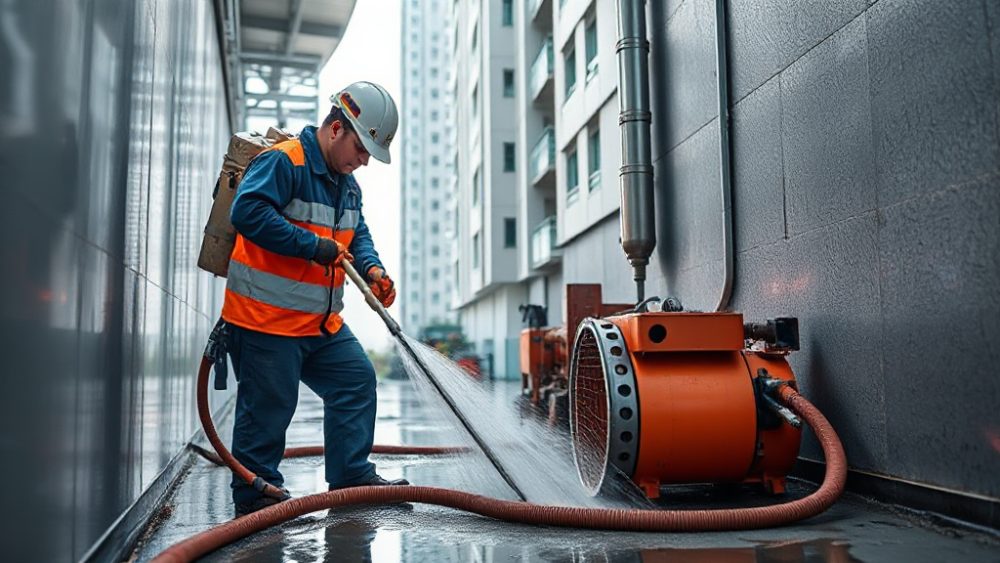
Drain Maintenance Planning for Mauá SP Condominiums
A síndico in Mauá stands in front of an assembly with a simple question on the floor: why did drain spending rise this year? Without records, the answer is a shrug and a promise to look into it. The fix is not a bigger emergency budget; it is a governance routine that treats drains as planned infrastructure. The same discipline that keeps elevators certified and fire systems inspected can keep sewer lines flowing, and it starts with knowing exactly what exists underground before the first clog becomes a crisis.
Condominiums in Mauá share a common profile: older buildings with cast-iron or PVC stacks, shared grease traps, and a municipal network that does not always behave predictably during heavy rain. When the assembly asks about drain costs, the síndico who can produce an inventory, a maintenance log, a budget line and a schedule answers with authority. That is the framework this plan builds, section by section, with the concrete artifacts to prepare along the way.
Build the drain inventory before the first assembly
You cannot budget for a system you have not mapped. The inventory is the foundation of every other governance task, and it is the document that turns vague complaints into a defensible plan. Start with the building’s original plumbing drawings, then walk the property with a technician to confirm what is actually installed. Discrepancies between the drawings and reality are common in buildings older than twenty years, and they matter when a blockage appears in a line nobody knew existed.
What the inventory must record
- Every drain point: kitchen, laundry, bathrooms, floor drains, garage sumps, and roof leaders.
- Pipe material, nominal diameter and approximate age for each vertical and horizontal run.
- Location of grease traps, inspection boxes, cleanouts and the connection to the public network.
- Septic tanks or holding pits, with capacity and last emptying date where applicable.
- Known problem areas: recurring slow drains, backflow history, root intrusion zones.
Photograph each cleanout and inspection box and attach the images to the inventory. A visual record settles disputes about access and condition during assemblies. For buildings with commercial units on the ground floor, note the separate grease lines used by restaurants, because those lines clog faster and require their own schedule. If a line connects to a neighboring property or to a municipal gallery, record the easement or shared responsibility in writing.
Turn maintenance history into documentation
Most condominiums only document drains when something breaks. That habit produces a file of invoices with no context and no way to spot a pattern. The governance fix is a maintenance log where every intervention is recorded the same way, whether it was a routine jetting service or a 2 a.m. emergency call. The log becomes the evidence base for next year’s budget and the defense when an owner questions a charge.
The artifacts to produce each time
- A service report describing the line serviced, the method used, and the condition found.
- Before-and-after photos or video of the pipe interior where the contractor provides them.
- The invoice tied to the service report number, not filed separately.
- A one-line entry in the log with date, unit affected, contractor and cost.
Keep the log in a shared folder the síndico and the administrative staff can access, and back it up. When a recurring blockage appears in the same stack three times in a year, the log shows it, and the conversation shifts from emergency response to corrective work. This is also where a reliable partner matters: a desentupidora Guarulhos SP that issues written reports and images makes the documentation task far lighter than one that only hands over a receipt. Contractors who serve the region around Guarulhos often cover Mauá as well, and asking for a sample report before hiring tells you whether the paperwork will be usable.
Budget drain maintenance as a line item, not a surprise
A drain budget built from last year’s emergencies is a budget built on luck. The better method combines a fixed preventive line with a contingency reserve sized to the building’s risk. Preventive work includes scheduled jetting of grease-heavy lines, inspection of traps and cleanouts, and periodic video inspection of the main stack in older buildings. The contingency covers the blockages that happen anyway, because no schedule prevents every clog.
To size the preventive line, use the inventory and the log. Count the linear meters of line that need annual jetting, the number of grease traps, and the frequency each requires. Then price the work with two or three quotes from contractors who serve the region, including a desentupidora Guarulhos that offers 24-hour emergency coverage, since the same contract can often bundle scheduled and emergency service at a better rate. Present the budget in the assembly as two columns, preventive and contingency, with the log as supporting material. Owners accept a planned number far more readily than an open-ended one.
Signals that the preventive line is too small
- More than two emergency calls in the same stack within twelve months.
- Repeated grease backups in the kitchen line despite quarterly cleaning.
- Slow drainage across multiple units at the same time, suggesting a main-line issue.
- Any backflow event that reached a ground-floor unit.
When two or more of these signals appear, the correct response is a corrective project, not a larger contingency. Corrective work such as relining or replacing a section of pipe is a capital expense and should be presented to the assembly with a technical report, not slipped into the maintenance budget.
Schedule the year around risk and season
Drain maintenance has a calendar logic that most condominiums ignore. In the rainy season, from late spring through summer, stormwater intrusion and saturated soil put pressure on older lines, and root intrusion becomes more visible. Schedule main-line inspections and jetting before that period, not during it. Grease-heavy commercial lines need quarterly attention regardless of season, and grease traps should be emptied on a fixed interval rather than when they overflow.
Build a twelve-month calendar with four anchors: a pre-rainy-season inspection, a mid-year review of the log, a scheduled jetting round for the highest-risk lines, and an annual review of the inventory for any building modifications. Each anchor has an owner, a date and a deliverable. The síndico signs off on the calendar at the start of the fiscal year and reports progress at each assembly. When an emergency happens, the calendar shows whether the line was due for service, which protects the síndico from unfair criticism and helps the contractor diagnose the cause.
For buildings that share a connection with a commercial unit, coordinate the schedule with the tenant. A restaurant that cleans its own grease trap on a different cycle than the building’s line creates a predictable failure point. Put the shared responsibility in the tenancy agreement and verify compliance during the scheduled inspection. If the building uses a septic system rather than the public network, add the emptying interval to the calendar and budget it as a fixed cost, since a full tank is a certainty, not a risk.
Communicate the plan to owners and tenants
Governance fails when the plan exists only in the síndico’s folder. Owners approve budgets they understand and resist ones they do not. The communication artifact is a one-page summary per fiscal year: what will be inspected, when, at what cost, and what the contingency covers. Distribute it with the assembly materials and post it in the common areas. When an emergency call happens, a short notice explaining the cause and the response prevents rumors from filling the gap.
Use plain language. Instead of listing technical terms, describe the work in terms of effect: the kitchen line will be cleaned four times a year to prevent backups into the restaurant; the main stack will be inspected before the rains. Invite owners to report slow drains early through a simple channel, and log every report. Early reports are cheap; backflows are not. A building that reports slow drains promptly gives the contractor a chance to act before an emergency, and the log then shows a pattern of prevention rather than reaction.
When the assembly asks about drain spending next year, the síndico should be able to open the inventory, the log, the budget and the calendar and answer in minutes. That is the standard to aim for. For buildings that need a contractor able to support this level of documentation and scheduled service, engaging a desentupidora em Guarulhos SP with written reports and 24-hour coverage closes the loop between plan and execution. The governance work is the síndico’s; the technical execution is the contractor’s; the records belong to the condominium and should outlast any single administration.
Review, audit and hand over the plan
The final governance task is the annual review, and it is the one most often skipped. At the close of the fiscal year, compare the plan against what actually happened. Which scheduled services were completed, which were postponed, and why? Did the contingency cover the emergencies, or did it run over? Which lines generated repeated calls? The answers feed directly into next year’s inventory, budget and calendar, turning the cycle into a continuous improvement loop rather than a repeated guess.
Produce a short annual report with three sections: completed work, incidents and costs, and recommended changes for the coming year. File it with the assembly minutes so the next administration inherits a documented baseline. Include the inventory update, the maintenance log summary and the current contract terms. A síndico who hands over a complete drain file leaves the building in a stronger position than one who hands over a folder of invoices, and the assembly that once asked why spending rose will instead be approving a plan it can follow.